Equestrian Shadows & Light: A Visual Exploration of Horses in Natural Landscapes

Horses and nature have the perfect sync required for a good photo. Capturing that moment through photography isn’t as simple as it seems. Most people think that it’s just about pointing the camera at an open field where there are a bunch of horses and jobs done.
However, in reality, it’s more about noticing light, framing movement, and understanding both the animal and environment.
On top of that, the most compelling horse photos tell a story. They make the viewer feel the wind in the mane, and the photo provokes emotions. Photography in these settings is part art, part patience, and part observation. And you need to know a thing or two about horses and how they move in a natural environment.
After all, they are living subjects who are quite unpredictable, and nature itself adds its own element with shifting light, moving clouds, and unexpected shadows. So, how to make the perfect photo of a horse in nature? Let’s find out.
Understanding Light in Horse Photography
Light is often the most difficult part of photography. Even though we are talking about outdoor photography, which usually requires less lighting equipment than studios and dark areas, capturing the perfect photo is all about light balance.
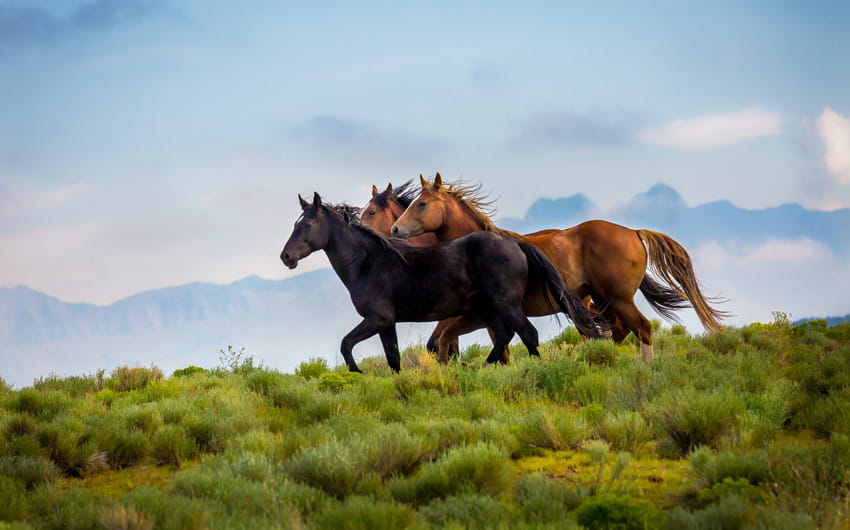
Early morning and late afternoon are the golden hours. This is usually the time when you can get the best shot. Why? Well, the sunlight is soft, warm, and directional, which casts long shadows that enhance muscle definition as well as coat texture.
Under these conditions, even a simple pose of a horse standing can create the best picture. But weather conditions change rapidly, just like in a horse race. And this can impact your photo quality and the results of the race. That’s why professional handicappers, who often place bets on horses, often take weather conditions into account when observing the odds and types of bets to make.
If you want to learn more about horse racing odds and how they work, you can check out the link here: https://www.twinspires.com/betting-guides/what-do-horse-racing-odds-mean/
As jockeys adapt to changing weather conditions, you, as a photographer, should do the same.
Overcast days shouldn’t be a problem. Diffused light reduces harsh contrasts and glare on the horse’s coat, which allows for more details without overexposure. This is really helpful if you photograph darker horses, whose glossy coats don’t allow you to capture the definition of the muscles.
In that case, photographers often use reflectors or white boards to bounce light into the subject (horse). This can make a big difference when capturing expressive eyes or subtle movements.
Composition in Horse Photography
Composition in horse photography is all about balancing the animal with its surroundings. Most people make the same mistake of centering the horse in every shot. If you are using the rule of thirds, you can create more dynamic photos. So, try to place the horse slightly off-center with space in the direction it is looking or moving. This will give the picture more motion.
You also have to remember that foreground and background elements add depth. A lone horse framed by a line of trees or fields that run in the distance can create layers to the photo that draw the viewer’s eye into the scene. So, don’t be afraid to include other elements like water, fences, a carriage, rolling hills, etc.
Movement also affects composition. Photographing a moving horse can be really difficult, but with burst mode on your camera, you can snap the perfect photo. Capturing a moving horse will introduce diagonal lines and add motion to the photo.
Selecting Subjects and Moments
With horses, you can get endless opportunities, but one thing is very important – patience. Not every moment is photographically interesting, so don’t just snap every single moment. Wait.
Horses do many different things, and even a small flick of the ears or a tail swish can give you much better results.
Then we have wild or free-roaming horses, which are perfect for a photo but also very challenging. These images often feel more authentic, which is kind of explainable since they show a horse in a natural rhythm. But they are more unpredictable, so you want to keep your distance (just so you don’t scare them away). Make sure you learn more about equine behavior before going on this journey.
Tips for Outdoor Horse Shoots
The most important thing to consider is the location. You should aim for fields that run miles into the background, forests, or streams. These landscapes give the photo a lot more depth, and that is the thing that brings it to life.
Then we have to talk about the equipment. Depending on what you’re photographing and the locations, you should go with prime lenses with wide apertures for a big background blur and zoom lenses, which are great for photographing wild horses. Trips are also useful for stability during shutter shots.
Finally, we cannot forget about safety. Horses are huge and powerful animals, and on top of that, they are unpredictable. Even a trained horse can get spooked and act irrationally, and someone could get hurt.
So, always maintain a steady distance, avoid sudden movements, and make sure you understand equine behavior before going on a full horse photoshoot.