How to Properly Care for Your Engagement Ring and Keep It Sparkling

Your engagement ring sits on your hand through every mundane and memorable moment of your life. It goes with you to the grocery store, into the shower, through a sweaty gym session, and back to bed. That kind of constant wear puts the stone and the metal through a lot, and most of the damage that accumulates over months and years is so gradual you won’t notice it until the ring looks noticeably dull. The good news is that keeping it in excellent condition takes very little effort. A few small habits, done consistently, will do most of the work for you.
What Actually Makes Your Ring Lose Its Sparkle
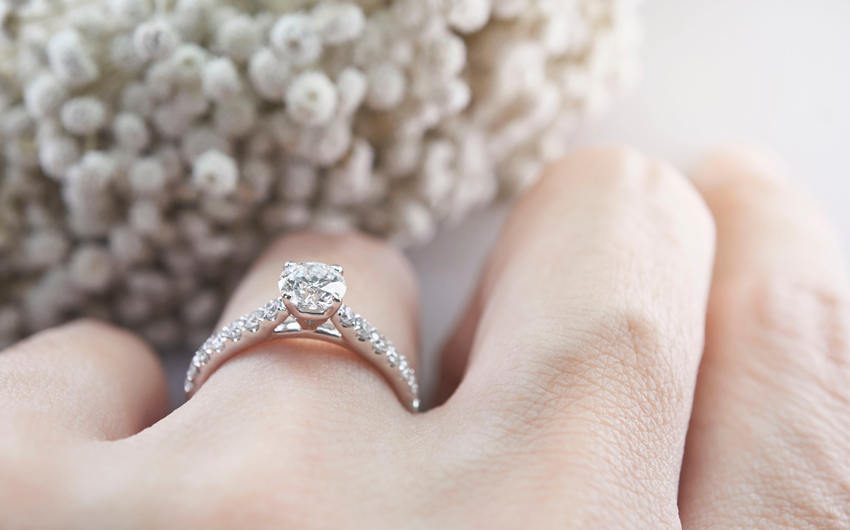
The film that builds up on a diamond is usually a combination of skin oils, soap residue, lotion, and fine dust. These materials settle on the surface of the stone and, more importantly, coat the underside of the setting where light passes through. A diamond’s brilliance depends on light entering the top, bouncing off internal facets, and returning to your eye. When grime coats the pavilion, that light gets absorbed instead of reflected back. The ring still looks fine at a glance, but the sharpness and fire are noticeably reduced.
Lotions and creams are among the worst offenders. The Knot advises removing your ring before applying thick moisturizers or sunscreen, as the residue sticks to the metal and stone and can cause discoloration over time. Hand sanitizer, cooking oils, and hair products contribute to the same problem.
Keeping the Cut Clean
Different diamond cuts collect grime in different ways. Oval and princess shapes tend to trap lotion and soap along their pointed edges, while round-cut diamond rings gather buildup underneath the crown where light enters. Emerald cuts, with their wide step facets, show smudges faster than most.
The GIA recommends soaking your ring in water with a few drops of mild dish soap once or twice a week, then using a soft toothbrush to reach the back of the stone. Rinse thoroughly and dry with a lint-free cloth.
The Weekly Soak
You do not need a specialized cleaning solution. A small bowl of warm water with a few drops of mild dish soap works well, and the GIA recommends doing this once or twice a week. Let the ring sit in the solution for 20 to 30 minutes. This loosens the oils and residue that cling to the metal and the stone.
After soaking, take a soft toothbrush and gently scrub around the prongs, along the band, and underneath the diamond. The underside is where most of the buildup hides, and it is the area that affects brilliance the most. Keep this toothbrush reserved for your ring only. Rinse the ring under running water, and dry it with a soft, lint-free cloth. Do not use paper towels, as they can leave behind tiny fibers.
One thing to avoid entirely is chlorine bleach or abrasive cleaning agents. According to the GIA, chlorine can damage the metals used in ring settings, weakening prongs and degrading finishes over time.
When to Take It Off
There are moments when wearing your ring creates unnecessary risk. Gardening, weightlifting, rock climbing, and any activity where the ring might get knocked hard against a surface should prompt you to remove it. The same goes for swimming in chlorinated pools.
Cooking with raw dough or sticky ingredients is another situation where removal makes sense. Food particles get packed into small crevices around the setting, and cleaning them out takes more time than prevention would.
Get in the habit of having a consistent place to store the ring when it comes off your finger. A soft pouch or a lined box works well. The GIA recommends keeping each piece of jewelry separate so stones and metals do not scratch each other.
Professional Cleanings and Prong Inspections
Home cleaning handles surface buildup, but a professional cleaning goes deeper. The Knot recommends bringing your ring to a jeweler for a deep cleaning twice a year. Jewelers use ultrasonic machines and steam to remove residue that a toothbrush cannot reach.
These visits also serve a second purpose. Rings with delicate settings, such as halo or pavé designs, are more prone to wear. Prongs can loosen gradually, and small stones may shift without you feeling it. Most jewelers recommend a prong inspection at least every 6 months. Catching a loose prong early costs very little to fix. Losing a stone because you missed it costs considerably more.
Insuring the Ring
Accidents happen regardless of how careful you are. A stone falls out at the beach. A ring slips off in cold weather. Insuring your engagement ring covers loss, theft, and accidental damage, and the cost is fairly modest. Premiums typically run about 1% to 2% of the ring’s appraised value per year. For a ring appraised at $5,000, that amounts to roughly $50 to $100 annually.
Most homeowners or renters insurance policies offer jewelry riders, though standalone jewelry insurance policies tend to cover a wider range of scenarios. Get the ring appraised before purchasing a policy so the coverage amount is accurate.
Building a Routine That Sticks
Ring care does not require a lot of time or money. A weekly soak, a designated storage spot, a habit of removing the ring during physical work, and 2 professional visits per year will keep the stone bright and the setting secure for decades. The effort is small, and the payoff is practical. Your ring stays in the condition it deserves to be in.