
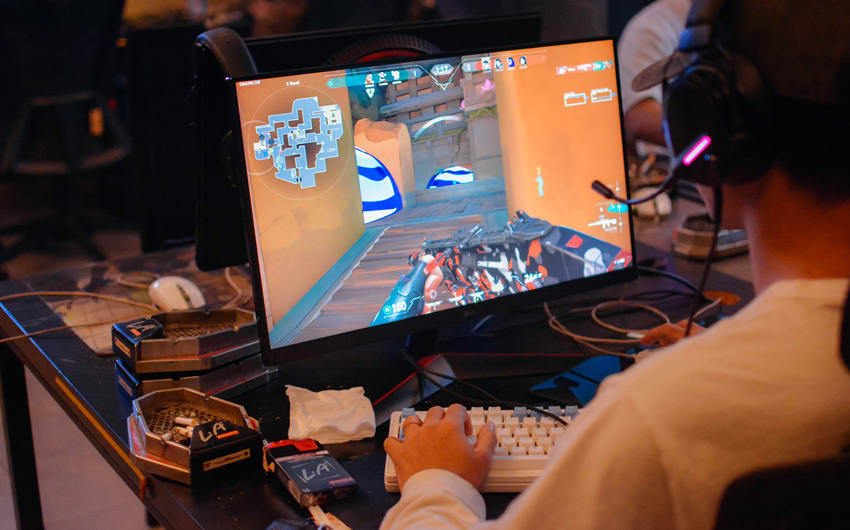
Crosshair Optimization in Valorant: From Settings to Smart Generators

In competitive Valorant, mechanical precision is influenced by more than raw aim. Visual structure plays a measurable role in reaction speed and tracking stability. Among all customizable settings, crosshair configuration remains one of the most impactful. Many players look for a ready-made valorant aim code instead of experimenting blindly, because small visual differences can alter performance consistency over long sessions.
Why Crosshair Design Affects Performance
A crosshair acts as a visual reference point for micro-adjustments. If it is too thick, it blocks head-level targets at range. If it is too thin or overly transparent, it disappears in chaotic utility situations. The ideal design balances clarity with minimal obstruction. This balance depends on resolution, monitor size, color calibration, and even lighting conditions within specific maps.
Gap size influences perception of recoil. A tighter inner gap can encourage burst discipline, while a wider gap may subconsciously support controlled spray patterns. Some players prefer static crosshairs because they eliminate visual noise. Others enable minimal movement or firing error indicators to better time their recoil resets. There is no universal solution; optimization depends on playstyle and cognitive preference.
Static vs Dynamic Crosshairs
Static crosshairs remain fixed regardless of movement or firing. They are often favored by players who rely heavily on muscle memory and pre-aim placement. Because the crosshair does not expand, the brain associates positioning with consistent pixel alignment.
Dynamic crosshairs expand during movement or shooting. Supporters argue that this visual feedback improves timing awareness, especially for newer players still learning spray control. Critics say it introduces unnecessary distraction. From a performance standpoint, experienced players tend to lean toward static designs, but exceptions exist.
The key variable is not popularity but compatibility with personal habits. Copying a professional setup without understanding its structure rarely produces identical results.
Color Psychology and Map Contrast
Color choice directly affects reaction speed. Bright green and cyan are common because they contrast well against most environments. However, some maps include dominant green or yellow tones that reduce visibility. In those scenarios, white or magenta can improve separation from the background.
Crosshair opacity also matters. A fully opaque design ensures visibility but may appear visually heavy. Slight transparency can reduce strain during long sessions but risks disappearing during bright flashes or abilities. Testing across multiple maps rather than a single practice range produces more reliable conclusions.
Why Players Search for Codes Instead of Building Manually
Manual configuration requires understanding multiple parameters: inner lines, outer lines, thickness, offset, opacity, outline settings, and center dot behavior. For many players, this process becomes trial and error. As a result, using pre-tested codes created by high-level players saves time and reduces uncertainty.
However, blindly importing a code does not guarantee improvement. Resolution differences and sensitivity settings can make the same crosshair feel completely different. Therefore, importing a code should be treated as a baseline rather than a final solution.
The Role of Structured Resources
This is where structured platforms become useful. Instead of random experimentation, players can explore curated collections and data-backed recommendations. On bo3.gg, there is a dedicated article analyzing the best crosshair codes used by professionals and high-level ranked players. Reviewing these setups allows users to compare structural similarities rather than copying blindly.
More importantly, the platform provides a dedicated crosshair generator. Instead of memorizing numerical values, users can visually adjust parameters in real time and immediately see how spacing, thickness, or outlines alter the final look. This interactive approach reduces friction and accelerates optimization.
Generator vs Code Copying
There are two main approaches to crosshair optimization. The first is replication: import a code from a professional player and keep it unchanged. The second is adaptation: use a generator to modify spacing, thickness, or color while maintaining the original structural logic.
Replication is faster but less personalized. Adaptation takes longer but increases ownership and comfort. Players who understand why a particular gap size or outline thickness works for them are more likely to maintain consistency under pressure.
A generator also allows side-by-side testing. Slight modifications, such as increasing thickness by 0.5 units or reducing inner offset by one value, can be evaluated immediately. This controlled adjustment prevents extreme swings in configuration that disrupt muscle memory.
Common Mistakes in Crosshair Setup
One frequent mistake is overcomplication. Adding outlines, center dots, firing error indicators, and movement error indicators simultaneously often creates visual clutter. Simplicity tends to improve clarity.
Another mistake is testing settings only in practice range conditions. Real matches introduce different lighting, utility effects, and movement stress. Any crosshair should be validated in competitive scenarios before final adoption.
Finally, constant switching harms consistency. Even a well-designed crosshair loses effectiveness if changed every week. Stability allows neuromuscular adaptation.
Performance Is a System, Not a Setting
It is important to recognize that crosshair optimization does not replace aim training, positioning, or decision-making. It supports them. The crosshair is a tool that enhances clarity, but it cannot compensate for poor crosshair placement habits or inconsistent sensitivity.
A structured approach works best: review professional setups, test variations through a generator, validate in real matches, and then maintain stability. Small visual refinements compound over hundreds of rounds.
Conclusion
Crosshair configuration in Valorant is a technical variable with measurable influence on perception and consistency. While there is no universally perfect setup, systematic optimization significantly increases comfort and clarity. Using curated professional examples and an interactive generator environment provides a logical path from experimentation to stability.
Instead of guessing values randomly, players benefit from analyzing structural patterns, adjusting with precision, and committing to a finalized configuration. In a game where milliseconds determine outcomes, visual efficiency becomes part of competitive discipline.