The Art of Not Over-Editing Travel Videos: Letting a Story Breathe on Screen

MD: The best travel videos aren’t the most edited ones. Here’s how to use video editing software, sound, and pacing to let your footage tell the story it was always meant to tell.
There’s a peculiar trap that catches almost every creator who picks up a camera while traveling. You come back with four hundred clips, three sunsets, two near-disastrous moped rides, and one absolutely unhinged market scene. Then you sit down to edit, and somewhere between the music selection and the fourth color grade attempt, the video stops being a story and becomes a highlight reel. Fast cuts. Transitions everywhere. A travel video that technically shows a lot but somehow communicates nothing.
It happens to everyone. Truly. Even experienced editors fall into it. The question isn’t whether the footage is good. The question is whether the editing respects it.
Why Less Editing Is Actually Harder
A highly edited video clip with quick cuts and a popular soundtrack is thought to require more skill than a slower, more thought-out piece. The truth is that it’s the other way around. Restraint requires confidence. It means trusting the footage, trusting the viewer, and resisting the anxiety that says something needs to happen on screen every two seconds.
Storytelling in travel content works exactly like in any other medium: setup, tension, resolution. A wandering walk through a chaotic spice market has a natural arc. A boat ride into the fog has an atmosphere. A meal shared with strangers has emotional weight. But none of those moments survive editing that treats them like obstacles between transitions.
The best travel videos – the ones people actually finish watching – tend to share one quiet characteristic: they let scenes run a beat longer than feels comfortable. That extra second of a fishing boat disappearing into morning mist? That’s where the feeling lives.
Choosing the Right Tools Without Getting Lost in Them
There are so many video editing software options available today but don’t let them ruin your workflow. Chasing features and constantly re-learning interfaces eats the time that should go into storytelling decisions.
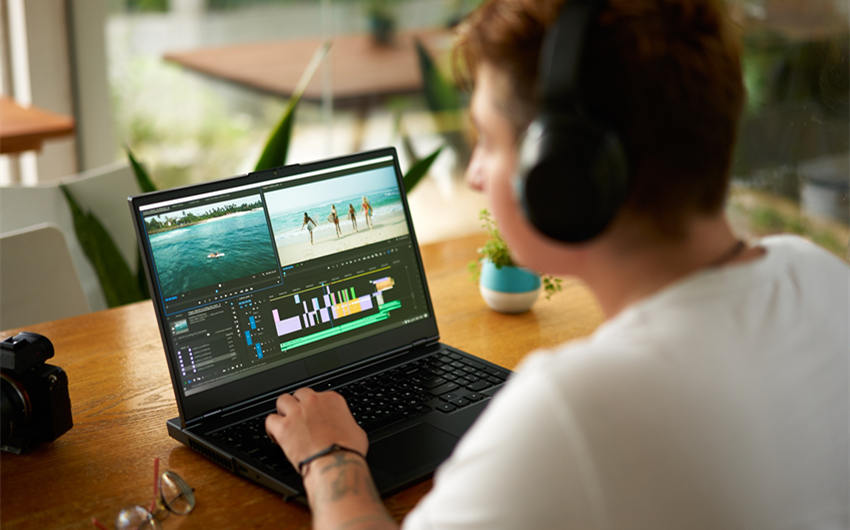
For most travel content creators working with standard formats, a solid MP4 video editor with a clean timeline, decent color tools, and reliable audio syncing is all that’s genuinely needed. Movavi Video Editor handles this beautifully at zero cost. VN has become legitimately useful for faster social-format cuts. Even browser-based video making software has reached a point where it handles basic edits without the software install headache.
The tool matters less than the habit of making deliberate choices inside it. Pick one. Learn it properly. Then stop thinking about the tool and start thinking about the story.
The Editing Mistakes That Quietly Kill Travel Videos
This is, admittedly, the section most creators need to hear – and most would rather skip.
The most common editing mistakes in travel content aren’t technical errors. They’re storytelling decisions made out of impatience or insecurity:
- Cutting before a moment resolves – A child laughing, a wave crashing, a vendor haggling: these moments have natural endings. Cutting away two seconds early robs the viewer of the payoff they didn’t know they were waiting for.
- Treating silence like a problem – Not every frame needs music. Not every scene needs ambient fill. Sometimes the sound of wind, distant traffic, or a crackling fire is the atmosphere – and drowning it in a synth track is genuinely a loss.
Both of these mistakes come from the same place: not trusting the footage. Which is, of course, also not trusting the experience that was worth filming in the first place. So use video editing software wisely.
Sound Is Half the Story – Probably More
Get the best sound possible in the field, and the edit becomes dramatically easier. This sounds obvious. It isn’t, apparently, because travel blog and vlog content is saturated with videos where the visuals are gorgeous and the audio sounds like it was recorded inside a sock.
External microphones – even cheap clip-ons – transform location audio. But beyond gear, it’s about developing awareness while shooting. Stepping slightly away from a crowd to capture a cleaner ambient soundscape. Pausing before speaking to let a scene’s natural audio establish itself. Recording dedicated “room tone” in hotel rooms or at scenic stops – thirty seconds of ambient sound that can fill gaps in the edit later.
Smart audio and video tools like Adobe’s AI audio cleanup can recover surprisingly damaged recordings. But they work far better on almost good audio than on genuinely ruined takes. The field work still matters.
The Music Question: Presence vs. Wallpaper
Music for travel video deserves its own honest conversation. The default approach – find an upbeat track, layer it under everything at medium volume, done – is so widespread that it’s become invisible. Functionally, for most viewers, it’s wallpaper.
Effective video editing uses music the way a director uses it in film: to shift emotional gear, to mark transitions in the story’s arc, or to underline a moment that words and visuals alone can’t carry. Sometimes that means silence before the music enters. Sometimes it means letting music fade out entirely while a scene does its work.
Montage techniques built around music can be genuinely powerful. But they work best when applied selectively, not as the structural logic for an entire piece. A full five-minute travel video edited entirely to the beat of one track stops feeling cinematic after about ninety seconds. It starts feeling like a loop.
Location Isn’t the Story – Experience Is
This might be the most important distinction in all of travel content creation. A tourism ad shows tropical places looking their most perfect: saturated skies, empty beaches, golden light in every direction. And fair enough, that’s the job.
But a travel video that actually connects with people shows something messier and truer. The three-hour delay at a dusty bus station. The meal that didn’t look Instagram-worthy but tasted extraordinary. The moment when the rain started and everyone scrambled for the same tiny awning and laughed about it.
MP4 video files of perfect scenery are abundant. What’s rare is footage of genuine human experience – and the editing restraint to let that footage speak. That’s the thing worth protecting from over-editing. Not the vista. The feeling.
The Final Cut That Isn’t Final
Every seasoned editor will finally agree that the final cut is the most difficult. The moment of setting down the video editing program, declaring the clip complete, and fighting the temptation to go back in and tighten one more item.
That urge? It’s often fear wearing the costume of perfectionism. And in travel content – where the whole point is to share something alive, something felt – perfectionism is frequently the enemy of connection.
Leave a little breath in the edit. The story will thank you for it.