Cloud, Edge, and Mobile: The Triple Threat Shaping Next‑Gen Apps

Traditional monolithic apps that rely solely on a central cloud core are no longer sufficient to meet the real‑time demand of today’s users. Instead, we’re seeing three foundational layers converge like cloud infrastructure, edge computing, and mobile devices. This trio forms what one might call the “triple threat” shaping next‑generation apps.
Cloud services still provide the backbone, such as scalable storage, heavy processing, and global reach, but edge computing is critical for reducing latency, optimizing bandwidth use, and delivering truly real‑time responsiveness. According to industry predictions, the move toward multicloud, cross‑cloud orchestration, and edge‑enabled workloads is a key trend in 2025. Meanwhile, mobile devices act as endpoints and as integral nodes.
What the Modern User Expects
The modern user expects more from their apps. They expect instant payouts, transparent gameplay, and a design that’s responsive and mobile‑first. This has led to a redefinition of what qualifies as the best casino app, one that removes the fluff, supports quick deposits and withdrawals, and provides a consistent experience across devices without downloads or delays. Casino platforms embody the very principles driving next‑gen app development with clarity, control, and performance. In the online casino space, that means no more clunky lobbies or gimmicky promos.
Instead, players are choosing apps that load quickly, offer real-money gameplay without distractions, and let them access classic games like blackjack, roulette, or video slots from anywhere. There is a demand for seamless integration of gameplay, account management, and support in a unified mobile experience that mirrors the broader shift toward real‑time, user‑driven software design.
The relevance of this for all app categories is direct. If a casino‑style experience can demand and deliver mobile‑first speed, low latency, and cross‑device consistency, then any consumer‑facing app must aim for the same. For instance, a mobile commerce app, a streaming platform, or an on‑demand service must replicate this level of responsiveness and fluidity while relying on cloud-edge infrastructure to support it.
How Cloud, Edge & Mobile Interact
The cloud layer provides global availability, large‑scale data storage, analytics, machine‑learning models, user management, and overarching orchestration. It is ideal for non‑time‑sensitive processes, batch jobs, historical data, and large‑scale training or heavy computation. Many predictions for 2025 highlight continued growth here, especially in AI infrastructure and cross‑cloud operation.
The edge layer sits closer to the user device, often within telecom networks, edge data‑centres, or on premises. It handles latency‑sensitive tasks such as real‑time decision making, caching, local analytics, and interactive experiences. Research shows that edge computing will allow real‑time features (e.g., in AR/VR) by significantly reducing end‑to‑end latency.
Finally, the mobile layer is the front‑end, where the user interacts via smartphones, tablets,and maybe wearables. Devices execute lightweight logic, interface with the edge/cloud, manage UI/UX, and deliver the final experience. According to 2025 mobile‑app trend reports, mobile dev teams are now emphasising cross‑platform, real‑time, edge‑aware features.
Why This Matters in 2025
In 2025, several factors will elevate the importance of this triple‑layer architecture. With faster mobile networks and greater coverage, mobile and edge combinations become viable for high‑throughput, low‑latency workloads. AI and personalization are now central to most user‑facing apps. Mobile apps embed AI for personalization, recommendations, and voice interfaces. These require low‑latency responses, which edge computing enables.
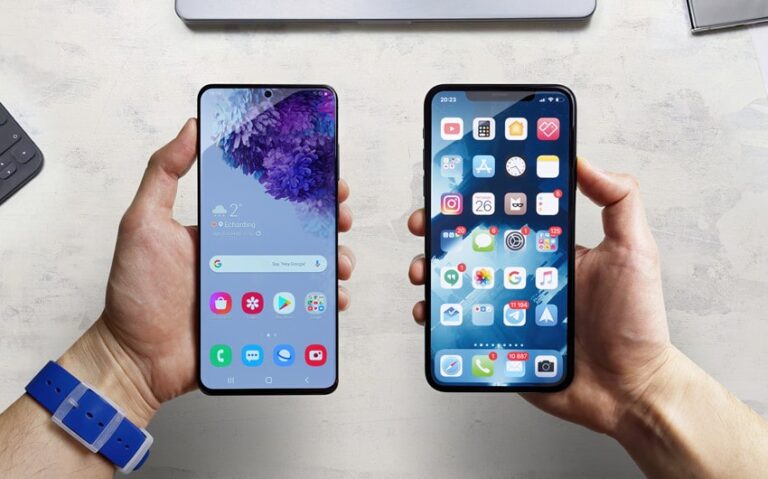
At the same time, the underlying mobile platforms themselves have evolved in ways that amplify these demands. Mobile operating systems, built around simplicity and long-term support or designed for flexibility and customization, have trained users to expect responsive performance, reliable updates, and seamless experiences across devices. As platform-level improvements narrow the experiential gap between ecosystems, app performance becomes even more critical as a differentiator. Regardless of whether users are on Android or iOS, they now expect real-time responsiveness, efficient design, and consistent functionality as standard.
Consumers now expect consistent app‑level performance regardless of where or how they access the service. Users expect zero friction. Additionally, enterprises are adopting hybrid workloads and multicloud strategies. They no longer rely on a single cloud region.
Practical Steps for Developers & Product Teams
Given all this, there are specific priorities developers and product teams should adopt. First, they must design for latency‑sensitive paths. Features like interactive gameplay, live streaming, or instant payouts require real‑time responsiveness and should be routed through the edge or devices rather than relying solely on the cloud.
Second, development teams should adopt cross‑platform mobile frameworks. Many apps in 2025 are built with frameworks that allow high performance across iOS, Android, and web while reducing time‑to‑market. Third, teams need to implement edge‑aware logic. Edge infrastructure is a key enabler of smooth experiences, especially for mobile users or those in unstable network environments.
Fourth, mobile‑first UX must be a core priority. Apps should avoid clunky menus, outdated lobbies, or bloated UI. They should be intuitive, lightweight, and offer a fluid experience. Teams should use the cloud layer for what it does best. This includes orchestrating complex systems, training models, storing data, and managing operations at a global scale.
Finally, development must be informed by real‑time metrics. Developers should continuously track device performance, network latency, drop‑off points, and UI bottlenecks. These insights must inform iterative improvement in architecture and design.